
FILM REVIEW: "Assi – Just another colloquial term in the name of street harassment and rape."
TRIGGER WARNING: Mentions of sexual violence, rape, child sexual abuse, harassment, and gender-based violence.
Skimming through my social media X feeds, I came across a particular handle. I was immediately intrigued by a poster where I could see two women — Kani Kusruti and Taapsee Pannu.
“What is the movie?” I had posed the question to that unknown handle. “Assi, and you better watch it,” was the reply.
I am currently under my daughter’s board exams lockdown mode, but the film freak in me insisted that I watch this movie. Don’t I call myself a feminist woman? So, watching this particular movie would be a perfect one for me, I thought.
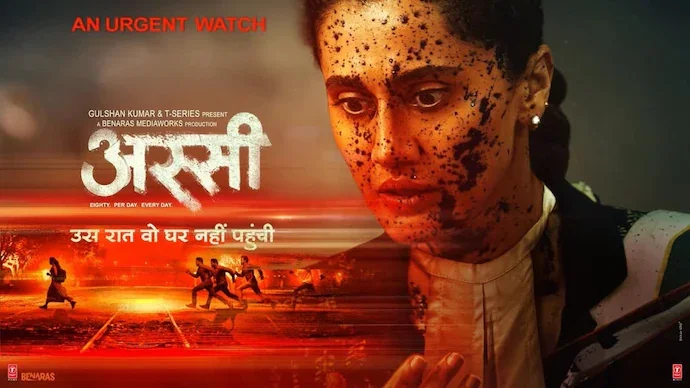
Assi (Eighty) was a compelling as well as a disturbing watch for me. Directed by Anubhav Sinha and released in February, this film spoke of the endless intimidation a woman has to endure in her lifetime. Be it from any social strata, the perspectives, behaviours, and voices of women are stereotyped. Molestation, harassment, child sex abuse, mental barbarism, and rape (which also includes marital rape) are the various recipes a woman has to taste at least once in her lifetime.
“As per the National Crime Records Bureau (NCRB), there are over 30,000 rape cases and counting, averaging no less than 80 rapes a day, or one every 20 minutes. Mind you, these are the crimes which are recorded, but there are countless voices which go unheard, unnoticed, and sometimes butchered to keep these heinous malfeasances discreet.”
Parima (Kani Kusruti), an ordinary school teacher happily married to Vinay (Mohammed Zeeshan Ayyub) and mother to a child (also a boy), is lifted randomly from a lonely street and brutally raped by a gang of five young men, some much younger than her, and is left to die in a half-naked condition near the railway tracks. She is saved by a man (yes, a man) who carries her to the hospital, and that’s when the film gains momentum and utters the next question for me — what now?
What follows next is a detailed courtroom drama where Parima is represented by her lawyer Raavi (Taapsee Pannu) and is countered by a perspicacious defense lawyer, Navratan (Satyajit Sharma). Witnesses were bought, DNA samples were destroyed, and with no evidence left to defend Parima, we could see the sheer helplessness in the eyes of the protagonist and Raavi, to the extent that advocate Raavi gets her face smeared in ink while attending one of the court proceedings. The five accomplices, who had actually computed the number of strokes they could inflict on Parima’s body, and with their guffaws, get more confident with each passing day that none of them will be identified, let alone get punished. The agony faced by the families of these accused boys/men is palpable, but they still try to conceal the crimes and also shell out huge money to protect these incels, which actually happens in real life as well. This also indicates the type of upbringing and parenting of these boys/men in today’s world.
Kartik (Kumud Mishra), a relative of Raavi and close confidante of Vinay, is reflected as a biased character who could neither tolerate the crime nor come to terms with the fact that he shouldn’t be helping his friend either. The torment of his not being at the side of his dying wife pushes him to the extent that he goes out and kills two of the rogues himself, while the defense and prosecution keep fighting it out in court to protect either the rapists or Parima. We can also get a glimpse of caste discrimination when we witness the North Indian in-laws of Parima calling her a “Madrasi”, while she is actually a Malayali, as if there is only one blanket word left to describe all the South Indians.
Sanjay (Jatin Goswami) plays that somewhat good cop who, though he is a part of our corrupt, botched-up system, grapples with his moral values and is unable to bear the gross injustice occurring in front of him. Suman (Neelam Gehlot), a tough female cop, gives respite to the audience during her third-degree interrogation with the criminals and their subsequent pleas for mercy. Vasudha (Revathy), who plays the role of the unprejudiced honourable judge, does justice to her role, which is appreciated. The film ends leaving several open questions to society, our government, our judicial system, and, of course, us — the common people of this country.
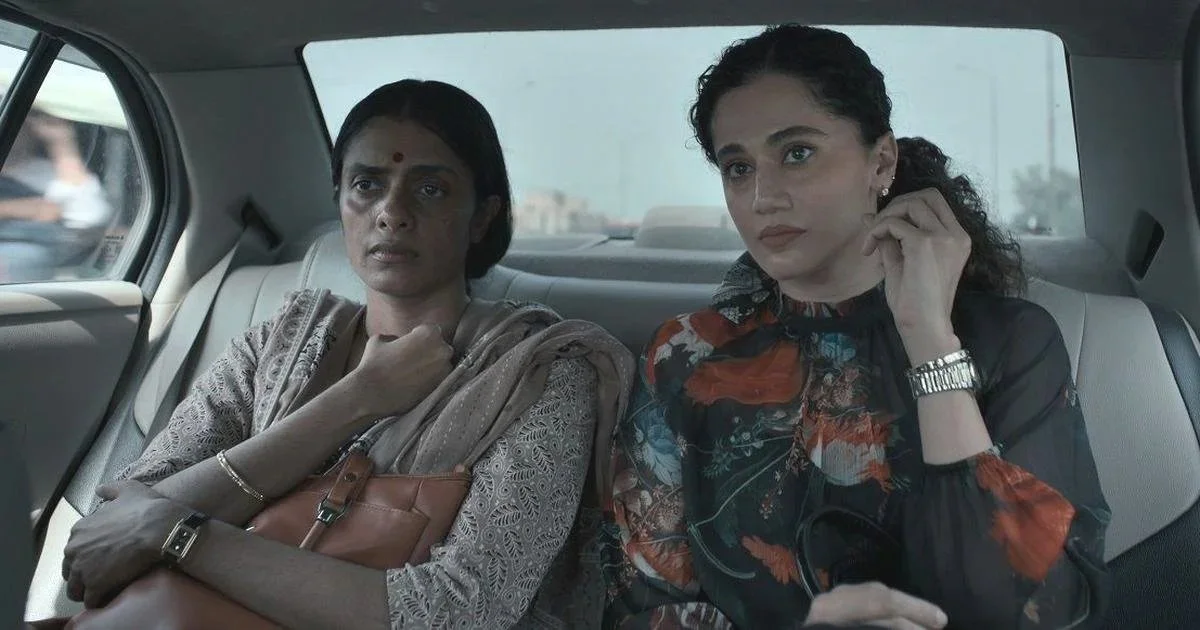
Parima’s role as a victim is commendable, as she is neither portrayed as a subjugated wife nor a powerful feminist voicing against crime — just a mother, wife, and teacher looking for answers: “Why me?” Mind you, you will feel the rage taking the upper hand when you witness those rapists count the maximum number of thrusts one can inflict on a vulnerable woman at their extreme climax. Parima’s school refuses to take her back, with some of her students writing and circulating cheap, vulgar jokes on WhatsApp and also creating memes about the rape of their own teacher. Also, we get to see our overtly concerned neighbours gathering at Parima and Vinay’s house just moments after Parima gets discharged from the hospital.
It’s ultimately the teen in the court (whose father was one of the rapists) who somewhat helps Parima get some part of justice and blurts out that she had seen rape happening at her home when questioned harshly by Navratan. It was her own father who had once raped her mother, and our society had pardoned off that callous man’s gesture as soon as he had decided to marry off the victim — who now observes fasts for her husband’s long life, conducts pujas for the wellbeing of their fragile glasshouse, takes care of the child born out of wedlock, performs all her duties as an obedient wife, along with getting raped by her husband at nights.
Naseeruddin Shah, as always, plays an astounding cameo in this movie as the mentor to Kartik.

Assi is a one-time, savage and feminist watch, but it definitely kicks you out of your comfort zone, adding to one’s emotional frustration. There were several loopholes in the movie, especially the second half, which dragged — but that happens with each movie, I guess. They are always a conglomeration of some pros and some cons. But as a single mother myself, the film left me wondering, while returning home alone after the night show — “Am I safe tonight?” “Is my daughter safe back at home while she studies for her exams?”
Movie image credits: T-SERIES

About the Author
Rimli Bhattacharya is a first-class gold medalist in mechanical engineering from NIT, working in the corporate sector. She has authored two solo books and has also contributed to four anthologies, out of which two have been edited by Jerry Pinto and Paromita Vohra. Rimli, a single mother, calls herself a feminist and voices against the rising crimes against women and children.