“me?”
An Artivism Installation on Street Harassment December 2025, Karnataka Chitrakala Parishath
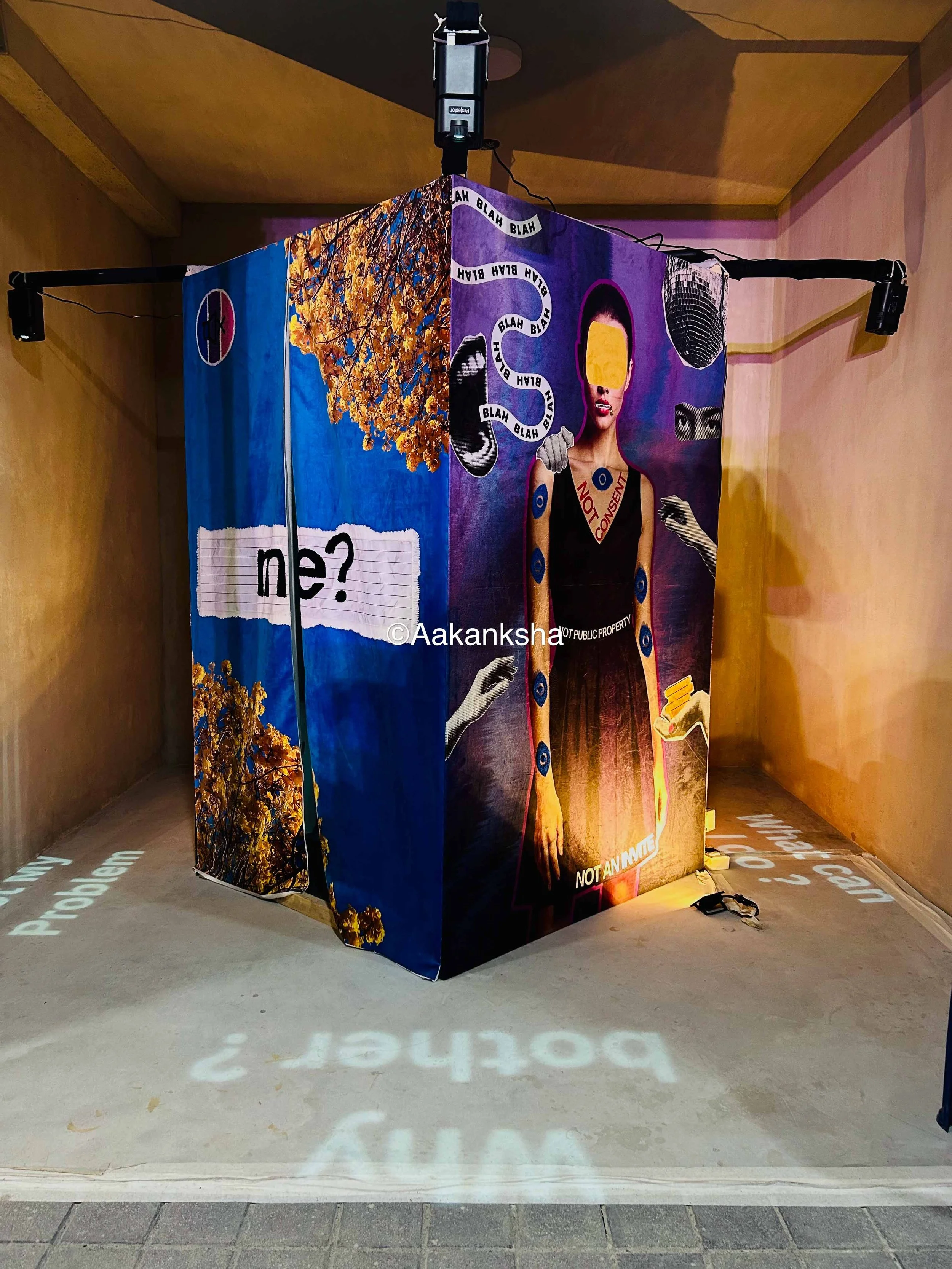
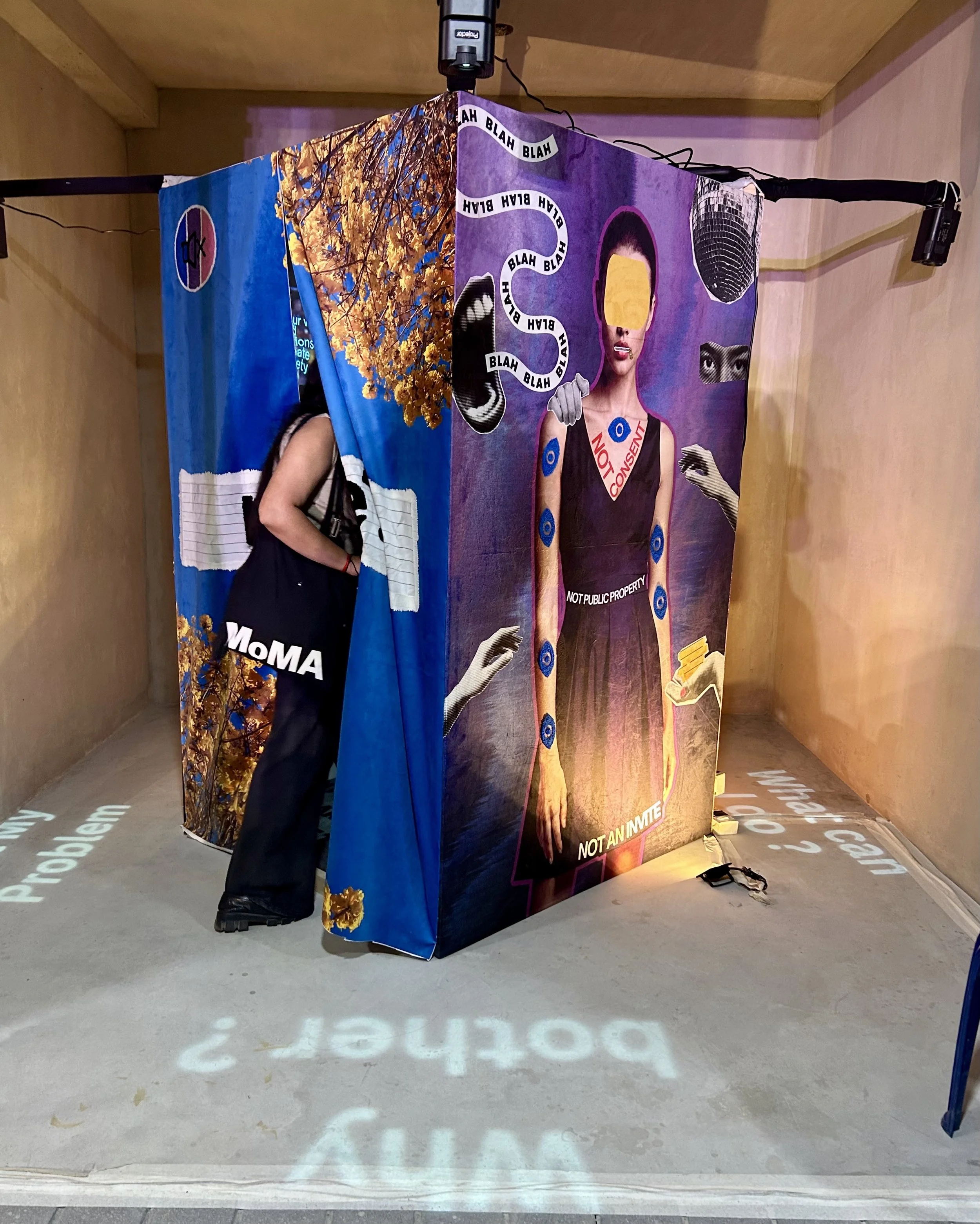
me? is a mixed media artivism installation conceived and developed by Aakanksha Manjunath, with Manasaram Architects shaping the structure of the physical installation. Funded by Skipper, who also supported the printing of the collages on fabric and the embroidery work, the project brings together design, material, and making in a deeply collaborative form. Rooted in everyday experiences of street harassment in Bengaluru, the work reflects on how public space shapes one’s sense of safety, presence, and selfhood.
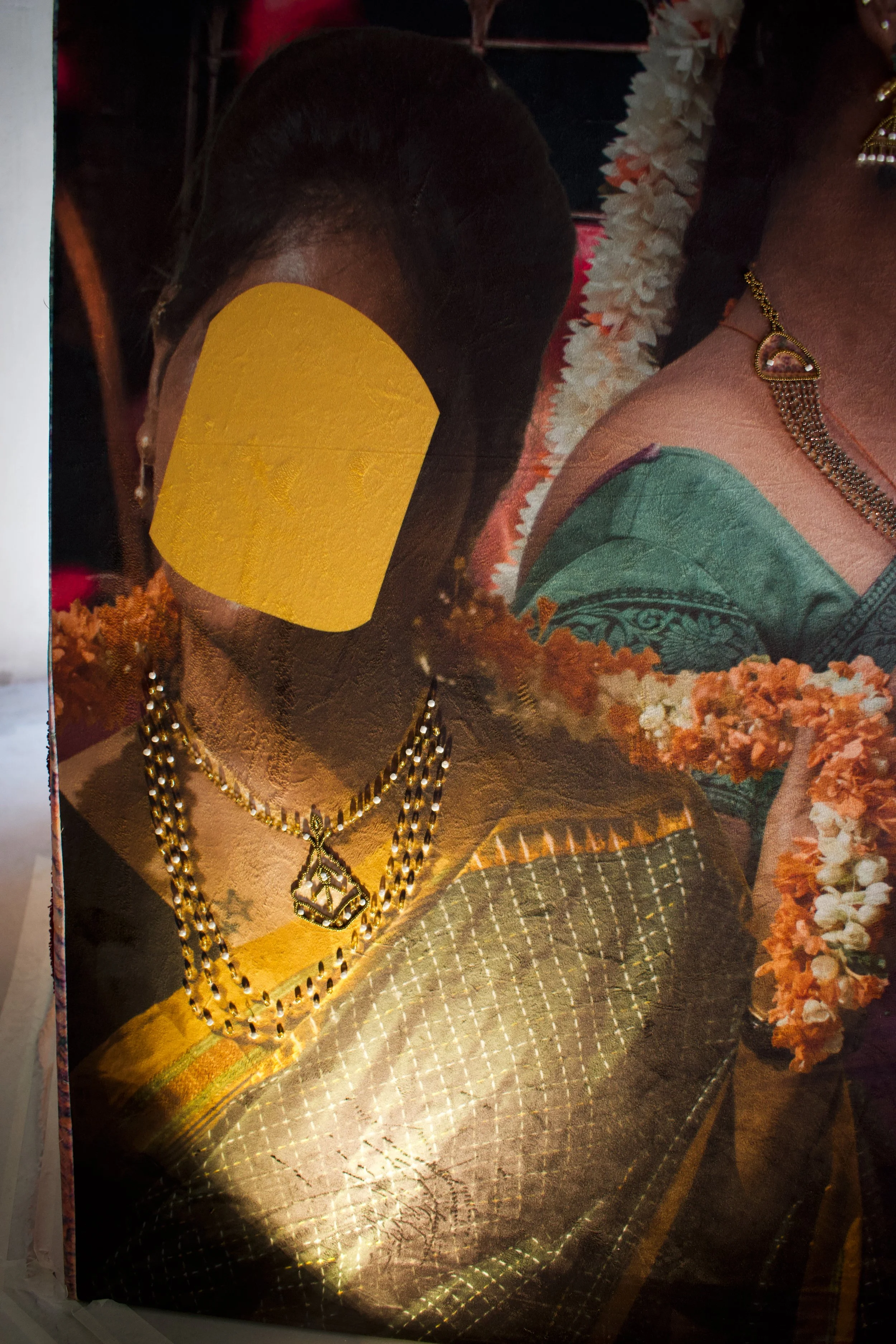
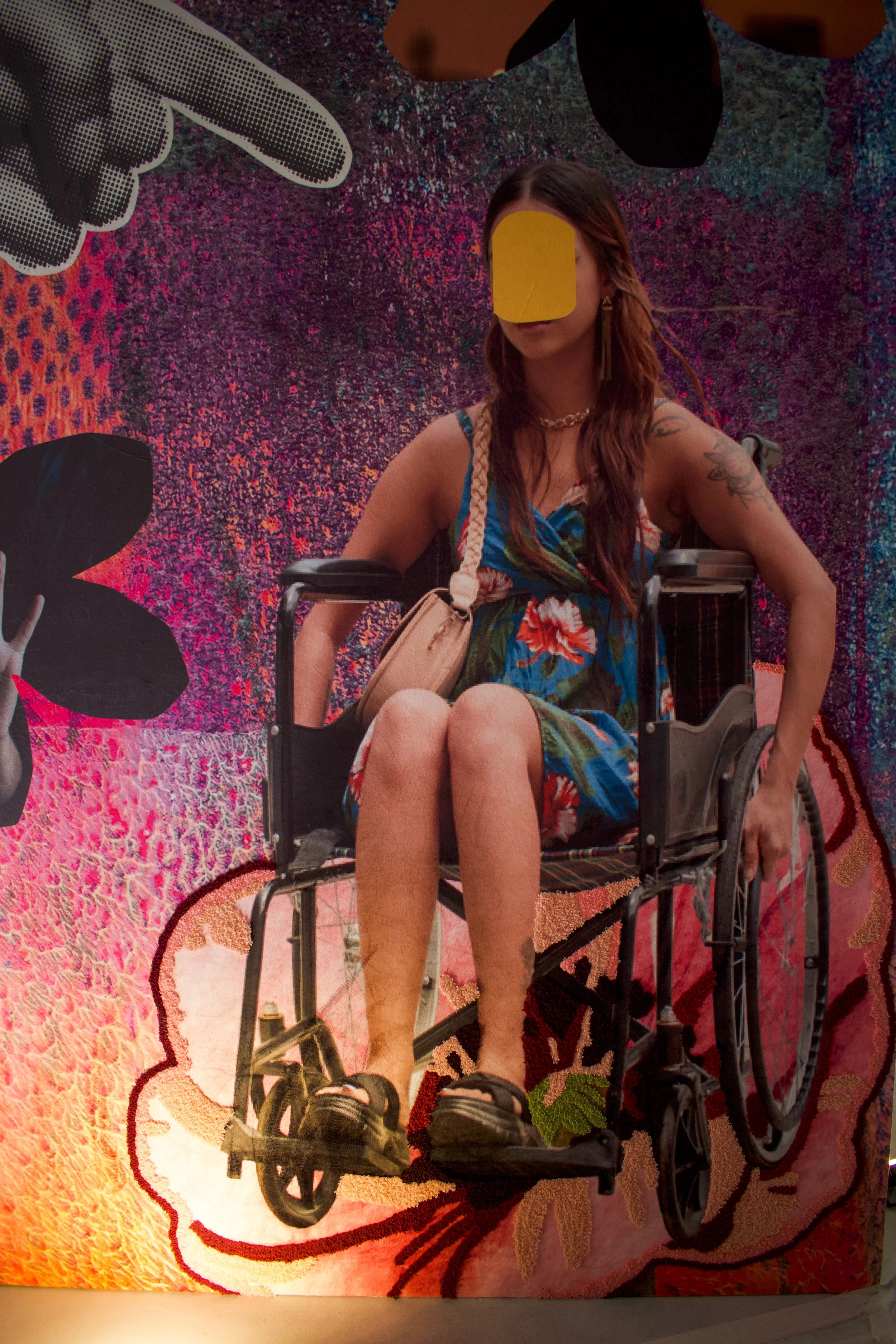
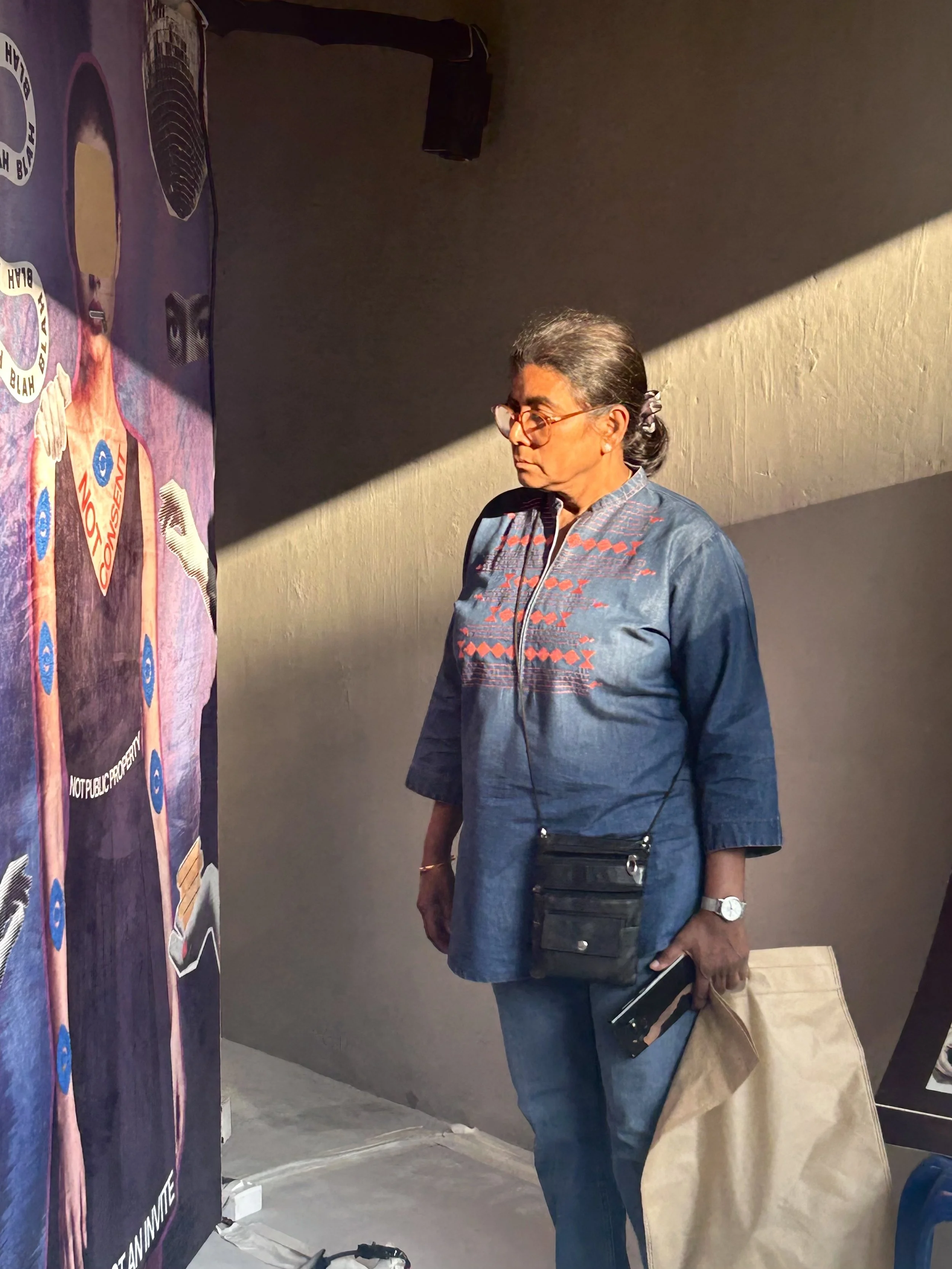
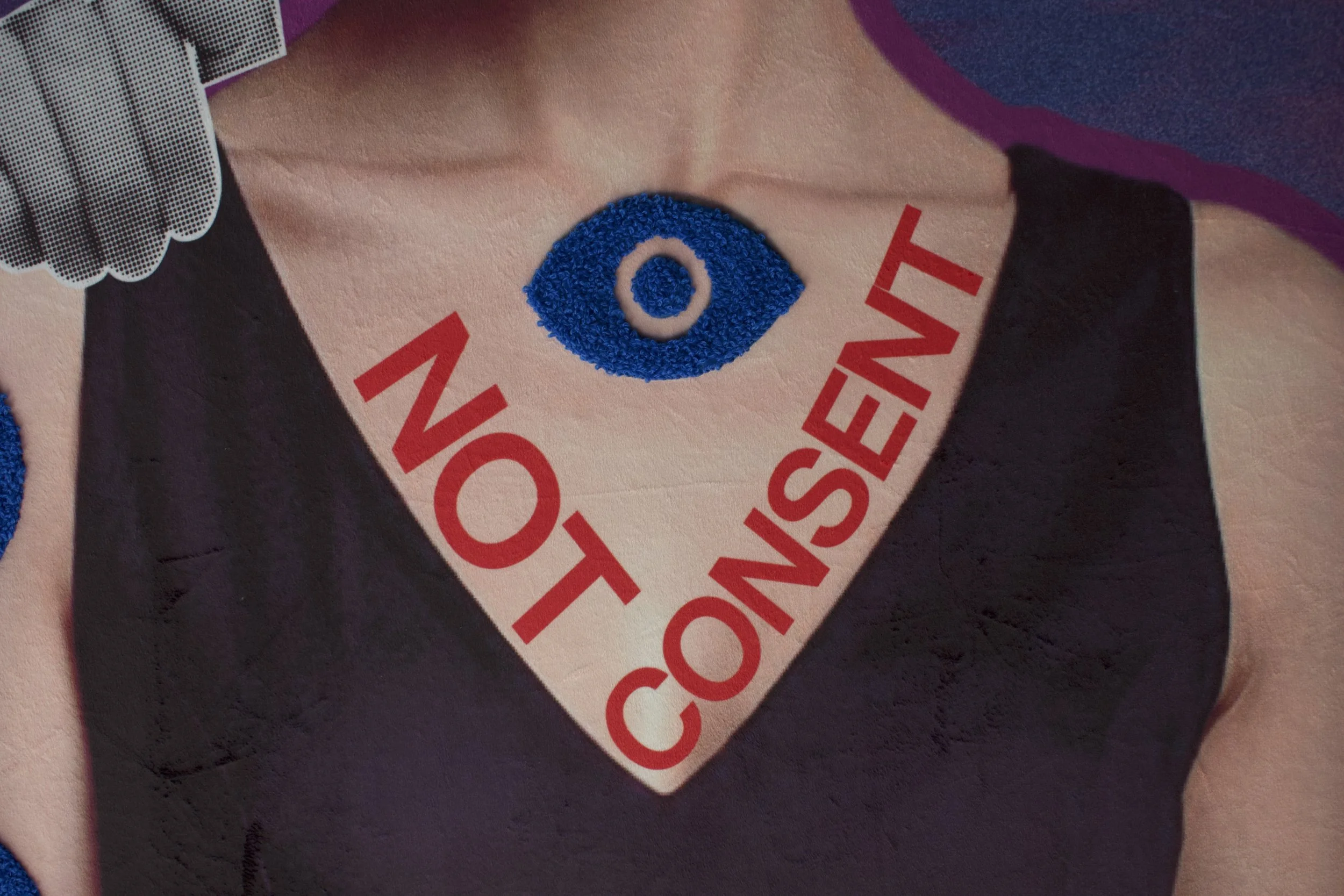
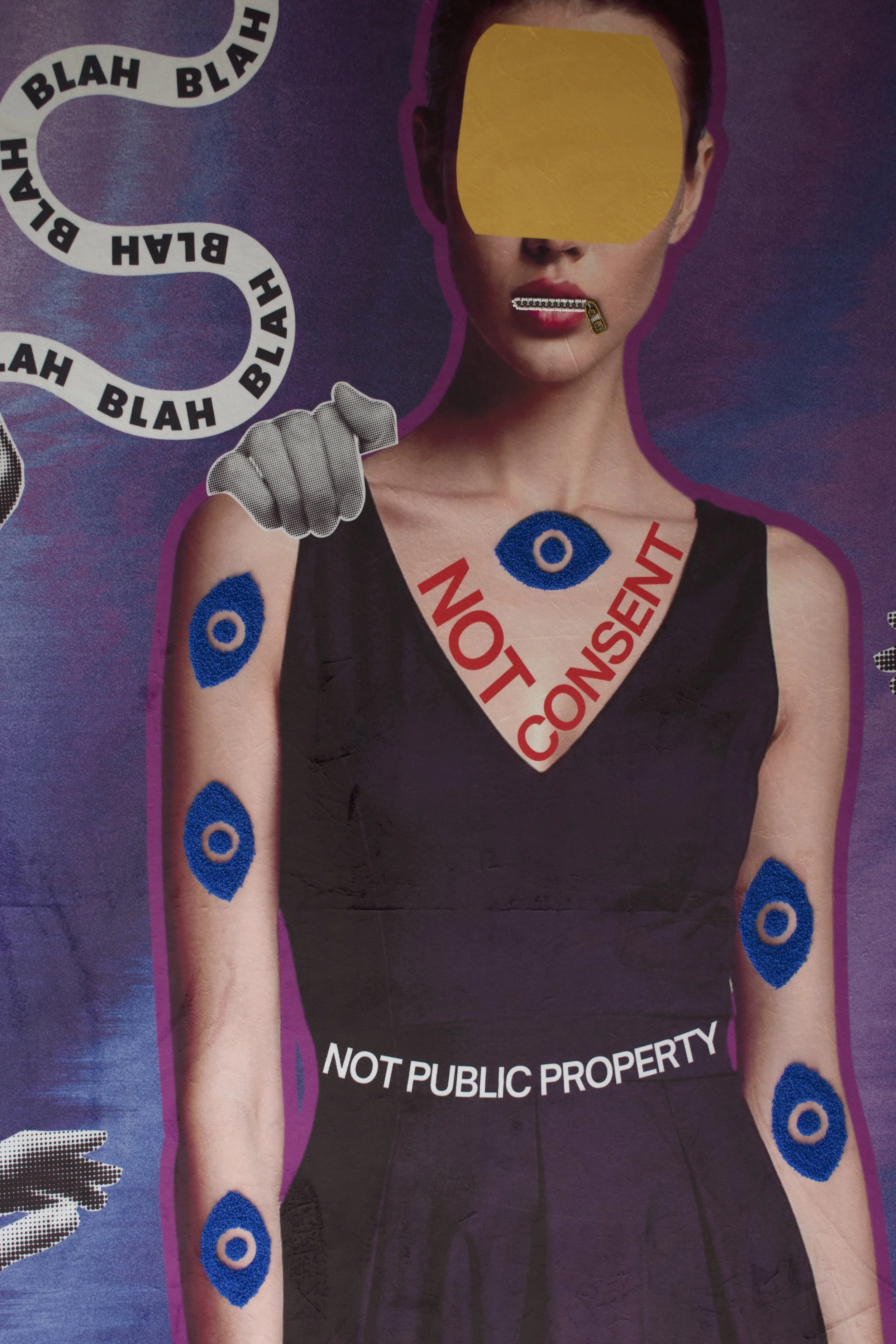
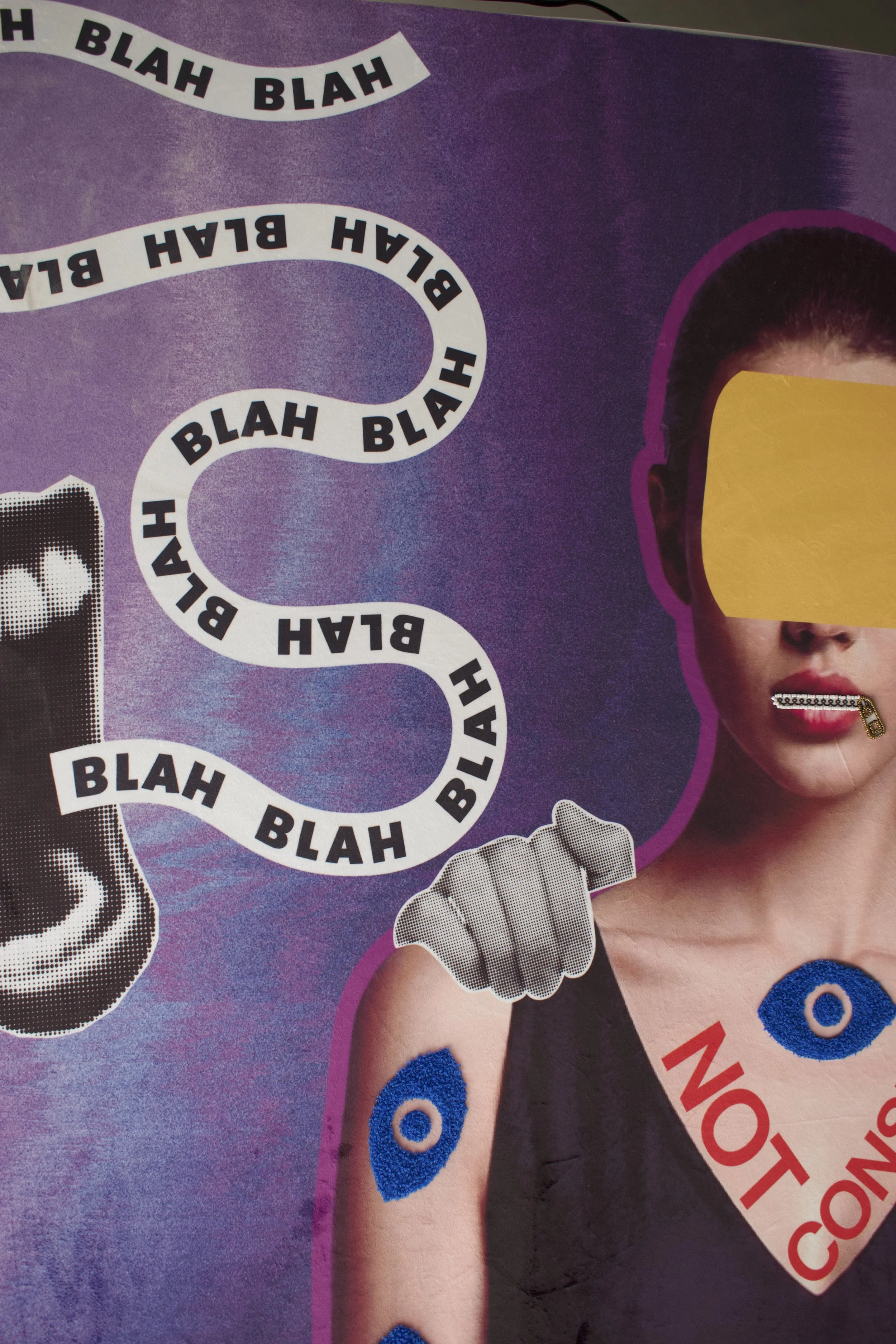
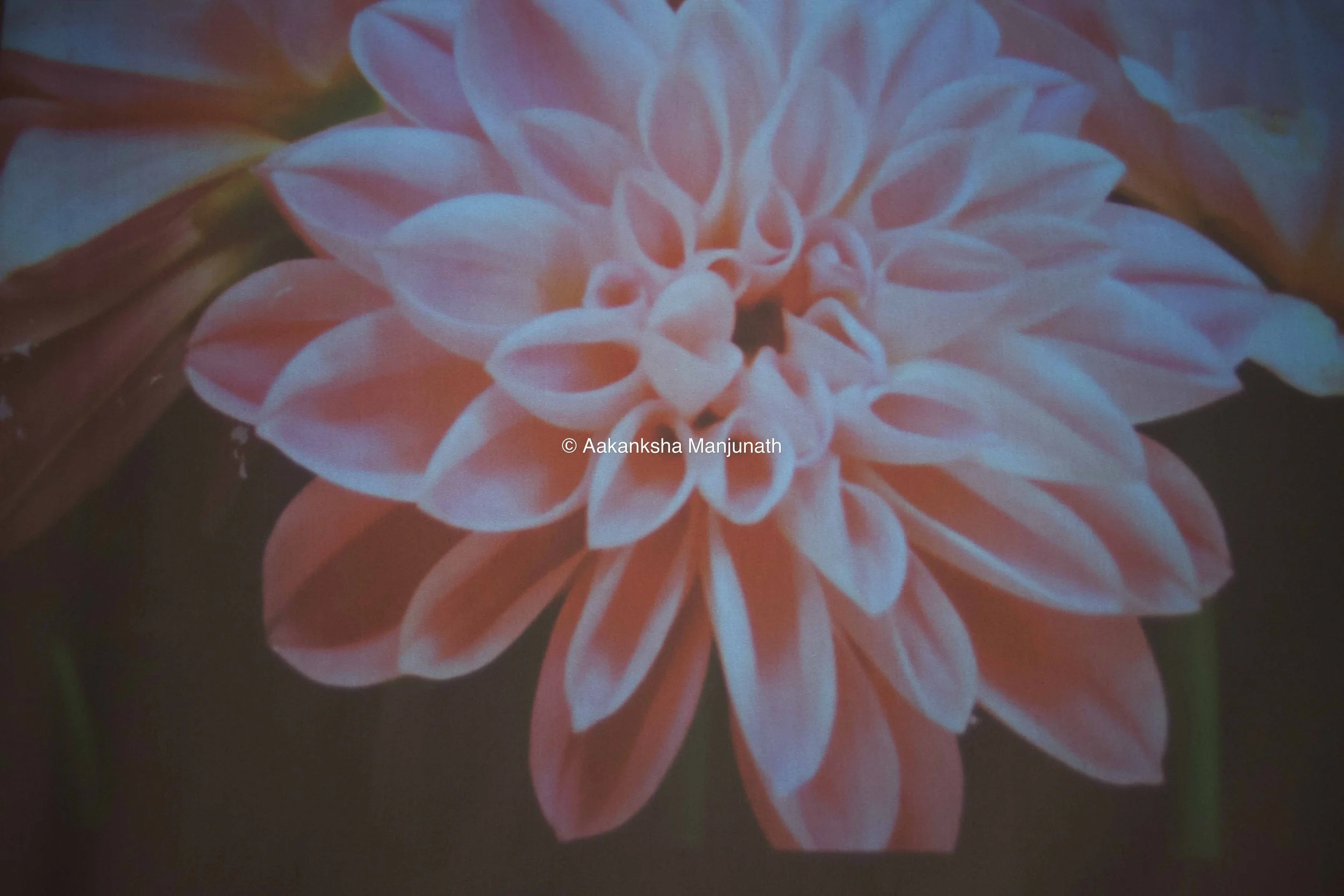
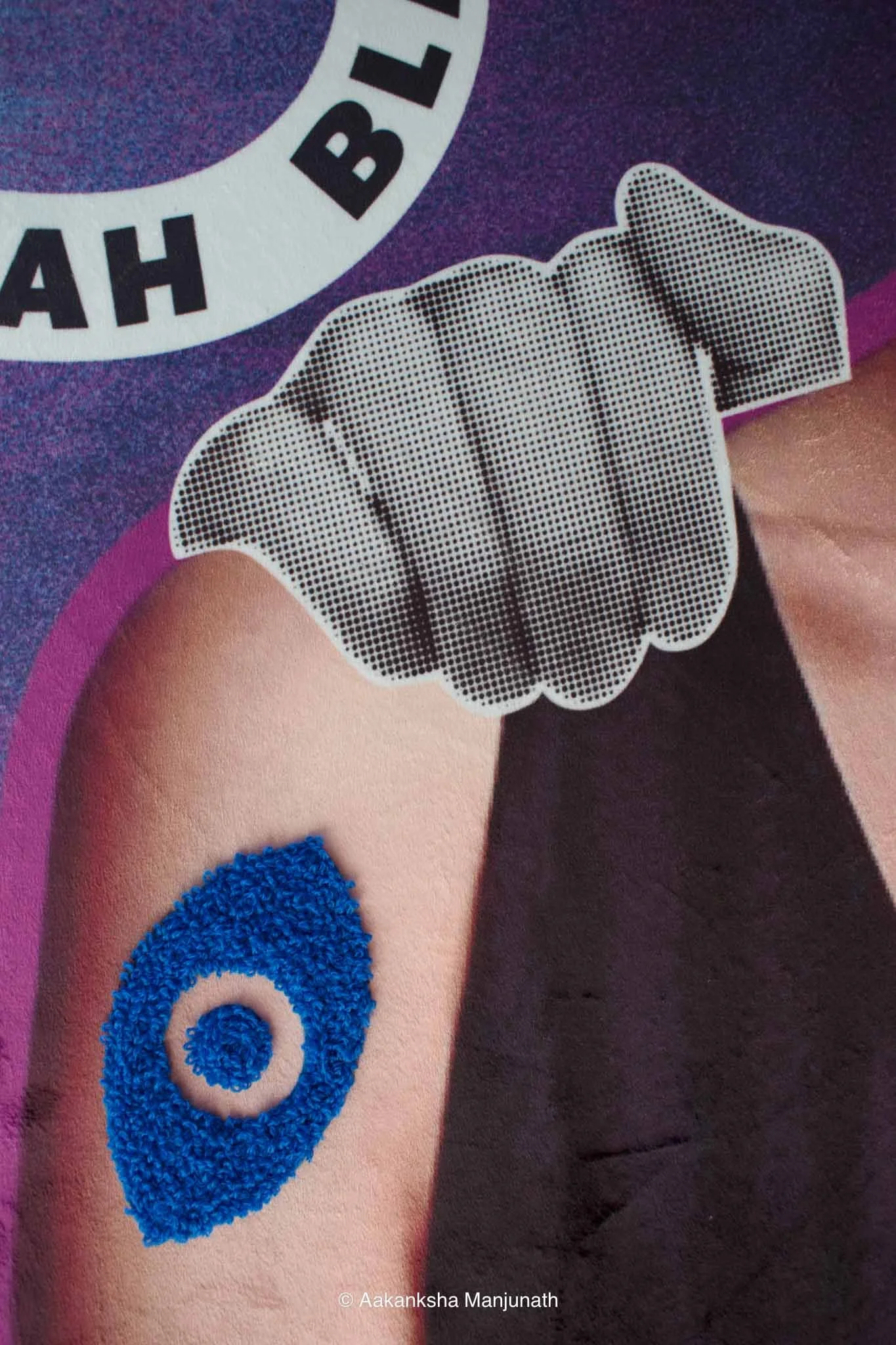
The exterior panels form the first layer of the installation’s narrative. Through collage, embroidery, and light, they assemble fragments of the city into a textured surface that is both visually dense and emotionally layered. Aakanksha developed the collages with clearly marked areas for embroidery, allowing the stitched elements to extend the images into a three-dimensional register. The embroidery, executed by the Skipper Furnishings team, introduces depth, tactility, and a sense of embodied labour. Details such as the stitched eyes on a woman’s hand reveal how image and thread can work together to produce both intimacy and tension.
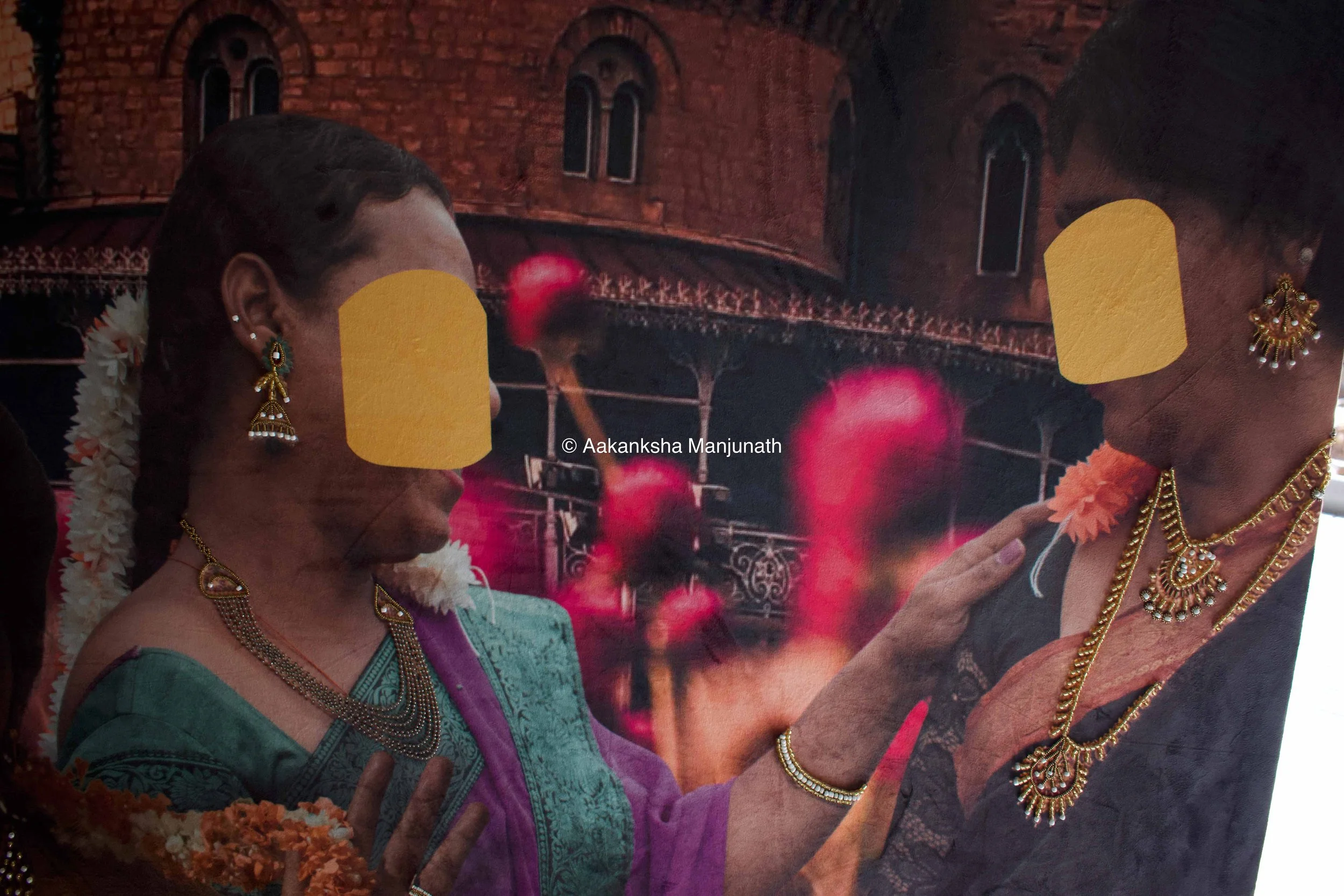
This layered exterior mirrors the complexity of harassment in public life: fragmented, repetitive, and often normalised, yet impossible to ignore. Collage carries the visual language of the city, embroidery brings care and dimensionality, and light animates the surface, holding these elements together in a shifting field of attention.
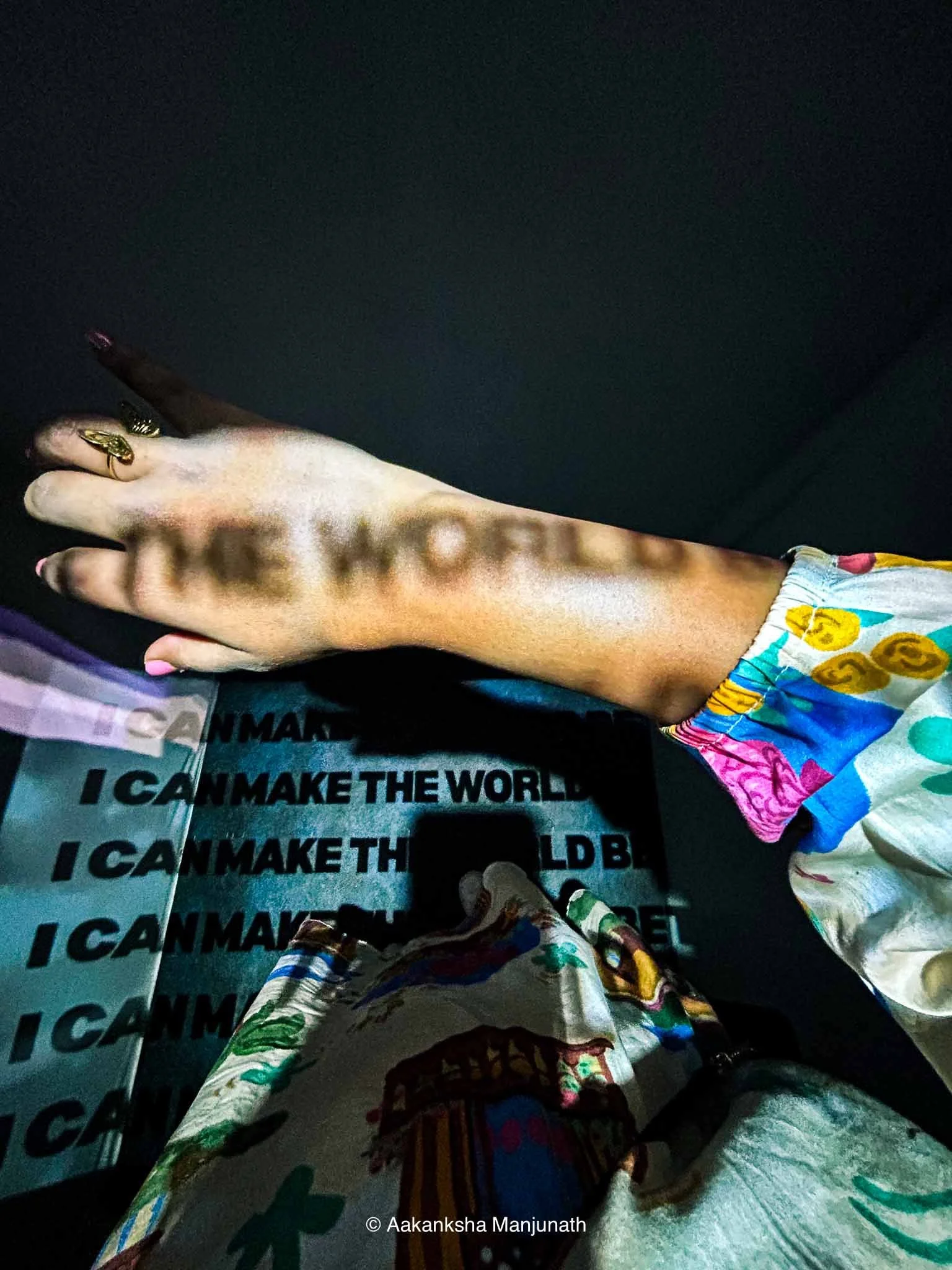
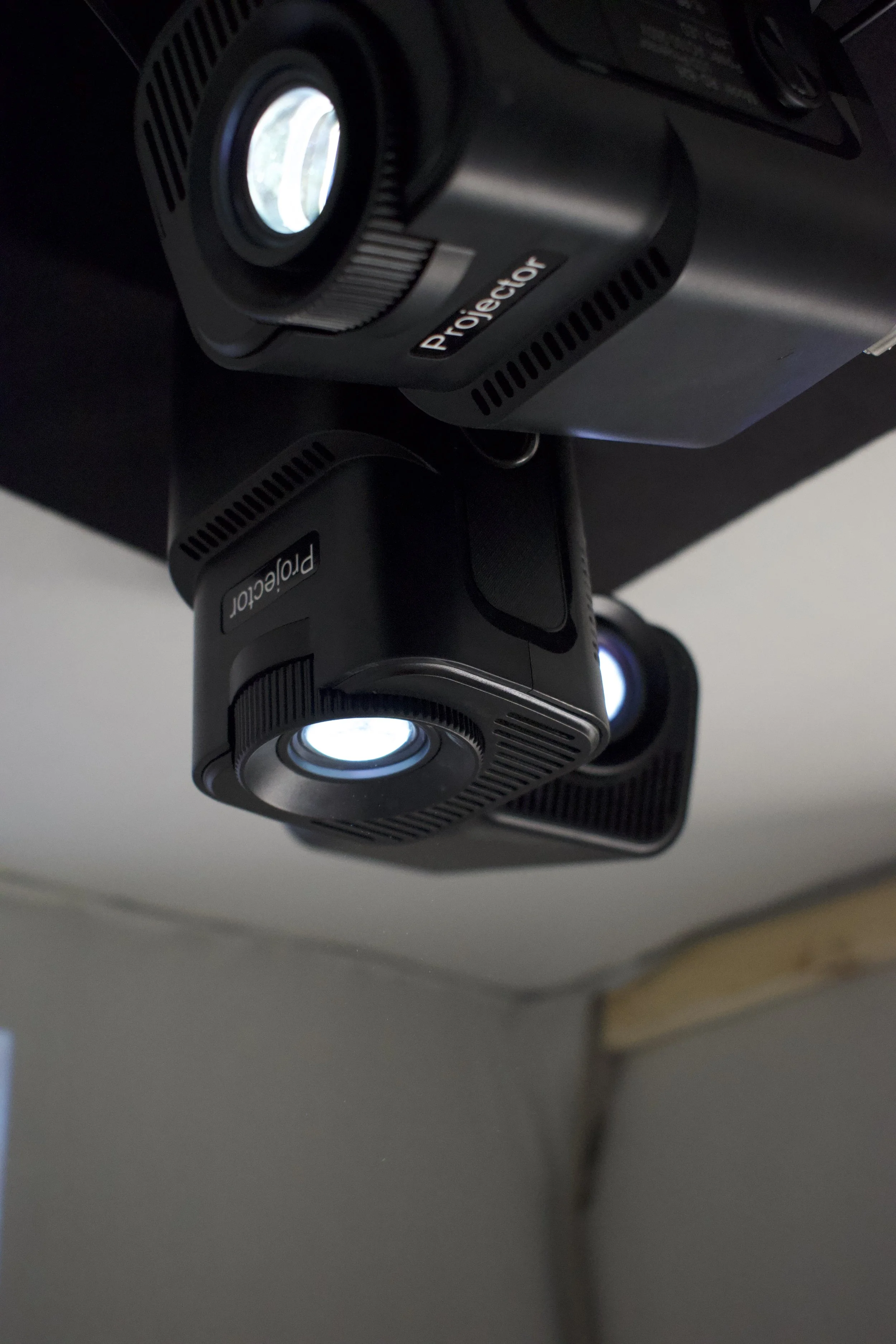
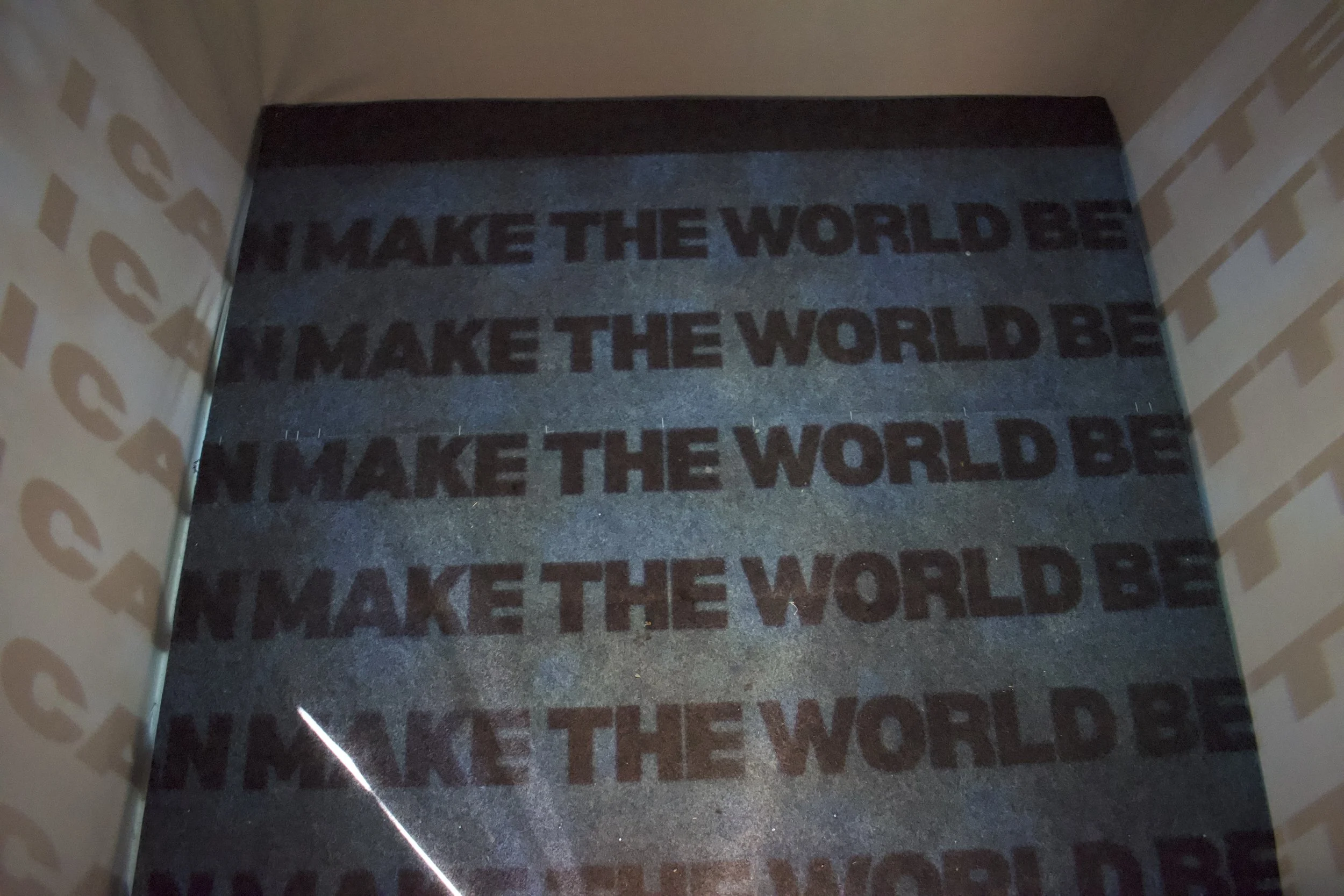
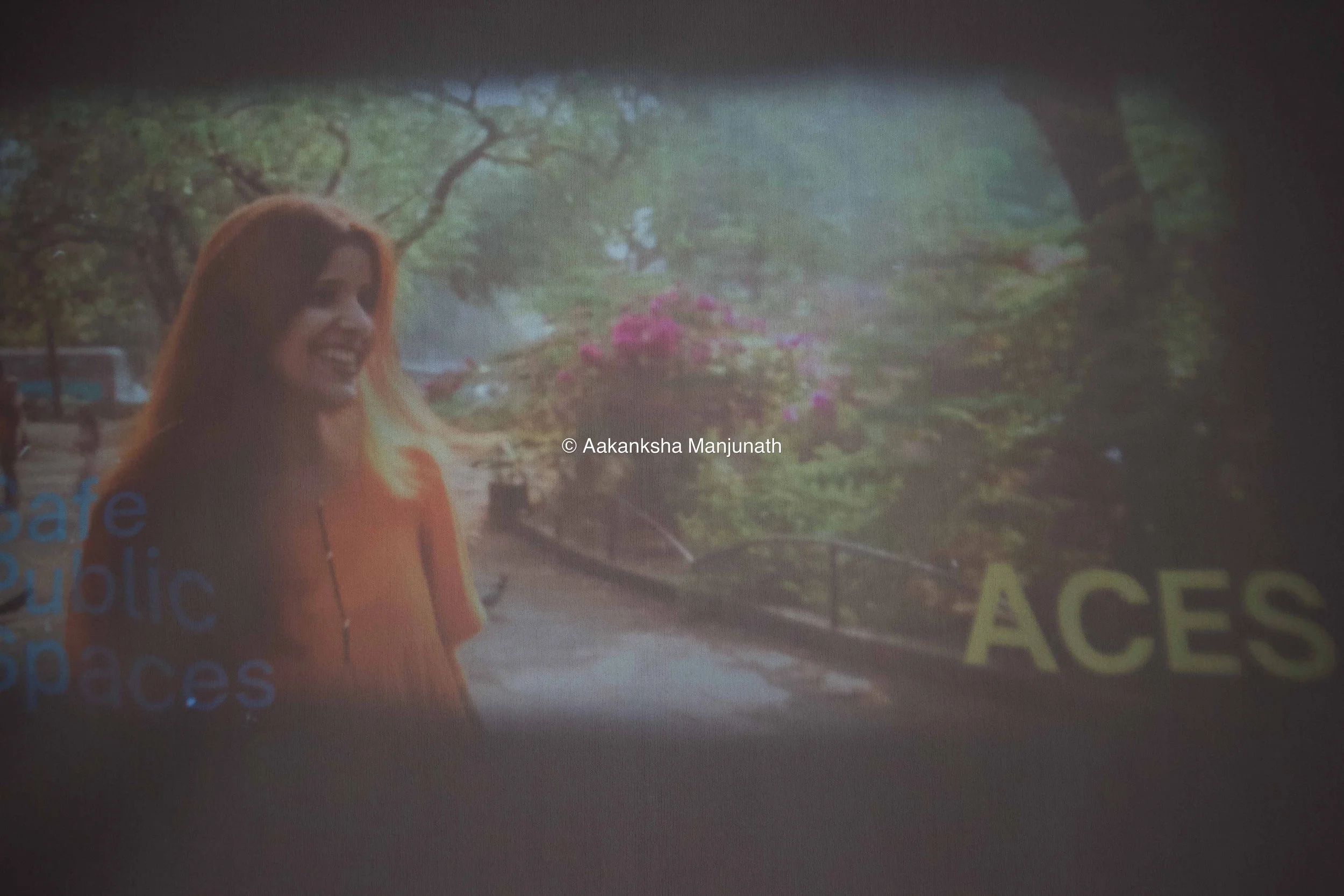
Inside, the installation becomes quiet, intimate, and reflective. The space is intentionally darkened, with a subtle lemon scent creating a sense of freshness and contrast. As viewers enter, an overhead projection casts the words “I can make the world better” onto their bodies, while side projections show slow videos of people moving through the city. These moving images shift the focus from the external world to the viewer’s own relationship with it, opening a space for contemplation, recognition, and agency.
Rather than operating as spectacle, me? creates a pause. It asks viewers to consider what has been normalised in public space, and to imagine what it might mean to move through the city with greater safety, dignity, and care. In doing so, the installation frames public space not only as a site of vulnerability, but also as one of possibility.